
A canary deployment in PHP lets you expose a new version to a controlled portion of traffic and evaluate its behavior before expanding it. Its value is not in replacing tests or guaranteeing that a change is safe: it offers a way to detect production issues with an initially limited scope and explicit decision criteria.
For it to work, versions must be able to coexist, traffic must be routed in a controlled way, and the team needs to observe comparable results. If the infrastructure cannot support these conditions, a simpler gradual rollout or a well-planned maintenance window may be a more sensible choice.
What Risk a Canary Deployment Controls

Automated tests and pre-production environments help find defects, but they do not necessarily reproduce the real distribution of customers, data, integrations, and load. A canary tests a version with real requests while limiting in advance which portion of the population can be affected.
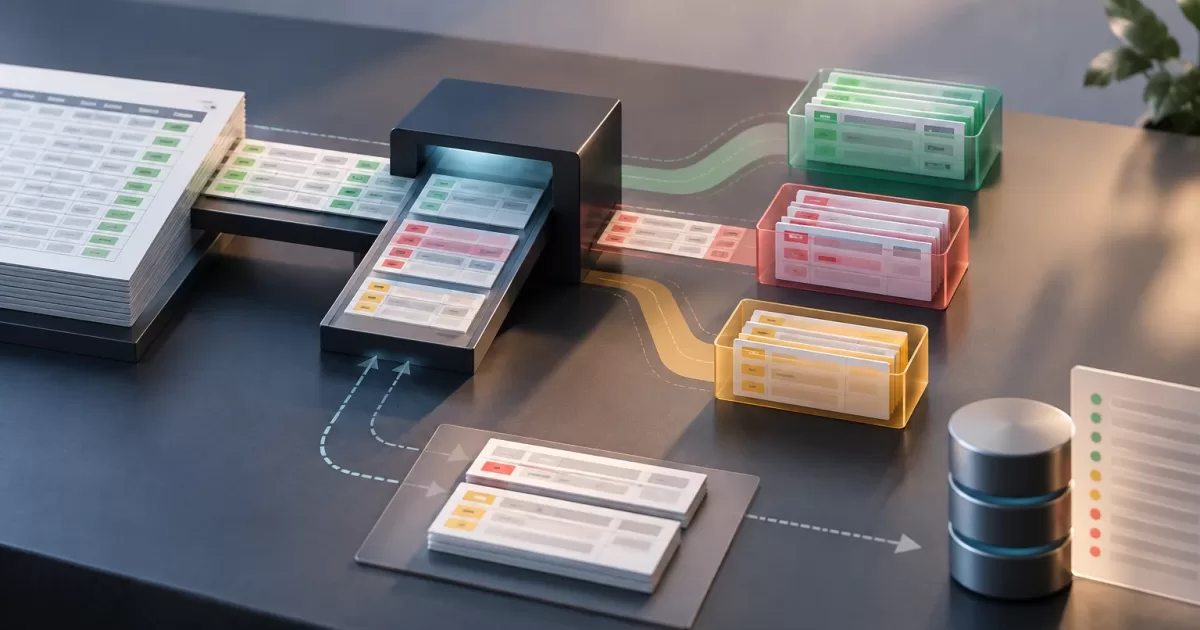
In practical terms, the candidate version receives a fraction of the traffic while the stable version continues serving the rest. The team compares health signals between the two. If there are no significant regressions, exposure increases; if adverse signals appear, the team stops the rollout and follows the planned procedure.
A canary is different from a progressive deployment understood simply as publishing in several stages. In a canary, the focus is on evaluating a population and comparing signals before making a decision. It is also different from gradual activation through a feature flag: a flag can hide a new feature while the code is already deployed, but it does not necessarily allow you to compare two versions of the application.
When to Use It and When to Choose Something Simpler
It can be valuable when a change has significant consequences, the application receives enough traffic to observe signals, and the architecture allows two versions to run at the same time. It is especially useful when you can limit the affected population and associate requests with the version that handled them.
It is not always worth it. If traffic is low, the results may be inconclusive; if the service is small and the change has limited scope, the operational cost of routing and observability may outweigh the benefit. Nor should a canary be presented as sufficient protection for an incompatible migration or an irreversible operation.
Simpler alternatives include deploying during a period of lower activity, using a feature flag to control a specific capability, or deploying to an internal environment first. These options address different problems: a time window reduces exposure over time, a flag controls activation, and an internal environment allows pre-release validation. The choice depends on the risk you want to reduce and the capabilities available.
Infrastructure and Operational Requirements
Before automating a canary deployment in PHP, check that the infrastructure can keep the stable and candidate versions running in parallel. This may require separate deployment artifacts, compatible PHP processes and configuration, and sufficient capacity to operate both versions during the evaluation.
- Controlled routing: A load balancer, proxy, container platform, or other component must be able to send a proportion or a defined population to the candidate. The mechanism must be reversible and have an operational owner.
- Version identification: Logs, metrics, and traces must make it possible to distinguish which version handled each request. Without this separation, a comparison may mix the effects of both.
- Compatible configuration: Shared secrets, environment variables, sessions, caches, and queues must work while the versions coexist. Do not assume incompatible formats or contracts between versions.
- Actionable observability: Define dashboards and alerts before deploying. A metric that no one can access or interpret in time does not help with decision-making.
Also consider session persistence and traffic affinity. Keeping a user on the same version can make comparisons easier, but this depends on the architecture and may bias the results. In any case, routing decisions should prevent unexpected state changes between versions.
Choosing the Population, Stages, and Evaluation Signals
Start with a population whose exposure you can explain and limit. It can be defined by a proportion of requests or by a controlled segment, as long as the selection is consistent and does not exclude the very cases that matter. Do not assume that a particular percentage is safe for every service: the initial size depends on traffic volume, potential impact, and response capacity.
Define the rollout stages and observation period in advance. Each stage must last long enough to observe the relevant usage patterns; simply waiting an arbitrary interval is not enough if the affected flow occurs infrequently. Establish who reviews the data and who can stop the process.
Compare the candidate and stable versions using signals that can detect both technical failures and harm to users:
- Errors: Failed response rates, PHP exceptions, dependency errors, and failures in asynchronous processes associated with each version.
- Latency: Response times, ideally broken down by important routes or transactions, together with resource saturation signals.
- Business outcomes: Completion of an operation, processed payments, or errors in a relevant flow, always using reliable definitions and data sources.
- Integrity: Duplicates, inconsistent states, or discrepancies between systems when the change could affect data or processes.
An improvement or stable result in an aggregate metric does not rule out a problem concentrated in a route, customer, or dependency. Review the context and error distribution, and compare equivalent periods and populations when possible.
Setting Thresholds and Preparing a Rollback
Before deployment, agree on which conditions allow you to expand, which require a pause, and which require a rollback. Thresholds should account for the baseline and the impact acceptable for the service; there are no universal values. For example, an increase in errors on a critical route may justify a pause even if the overall average remains stable.
Also document the procedure: who changes the routing, how the candidate is taken out of service, which checks confirm that the stable version is receiving traffic again, and how the incident is communicated. Pausing and rolling back are not synonymous: a pause stops exposure or further expansion while you investigate; a rollback returns the service to the previous version according to a validated procedure.
Rolling back code does not automatically undo data changes, messages already sent, or external operations. Therefore, a fast rollback must be tested as part of the plan and account for the state left behind after deployment.
Shared Data and Version Coexistence
The database is often the most sensitive point. If the new version immediately requires a column or format that the stable version cannot understand, the two cannot safely coexist. Design compatible changes in a sequence that keeps the service running: first prepare compatible structures, then deploy code that can operate with them, and later remove the old structures when no version needs them.
Apply the same principle to caches, sessions, queues, and internal API contracts. Check how consumers and producers behave during the transition, and prevent two versions from writing incompatible states. If you cannot guarantee this compatibility, you may need to separate the migration from the deployment or choose a different strategy.
Procedure and Checklist

A clear operational cycle reduces improvised decisions: deploy the candidate, verify that it is healthy before sending it traffic, activate the initial population, observe the agreed signals, decide whether to expand, pause, or roll back, and record the decision. After each stage, document the version, population, observation period, incidents, and owner.
Before starting, confirm that:
- The versions can coexist and there is enough capacity to operate them.
- Routing and rollback have been tested.
- Shared data and state are compatible during the transition.
- Metrics distinguish between versions and provide a useful baseline.
- Thresholds, owners, and pause and rollback steps have been agreed upon.
- The team knows which impacts cannot be undone automatically.
If several of these conditions are missing, start by improving tests, observability, and deployment controls before adding complexity. A canary deployment is an architectural and operational decision, not just a pipeline option: it adds value when it enables you to learn from real traffic and act before a regression reaches the entire population.