

An API is not compatible merely because it keeps the same route or version. Its consumers also depend on the shape of the data, validation rules, default values, and error behavior. If different clients update at different rates, a change that seems small to the server maintainer can disrupt a mobile app, a third-party integration, or an internal process.
A data compatibility policy for PHP APIs turns that risk into explicit decisions: which changes are acceptable, how they are rolled out, and which tests must pass before retiring a contract. There is no universal rule that makes every change compatible; you need to consider how each consumer reads and sends data.
The Contract Includes Data, Validation, and Behavior
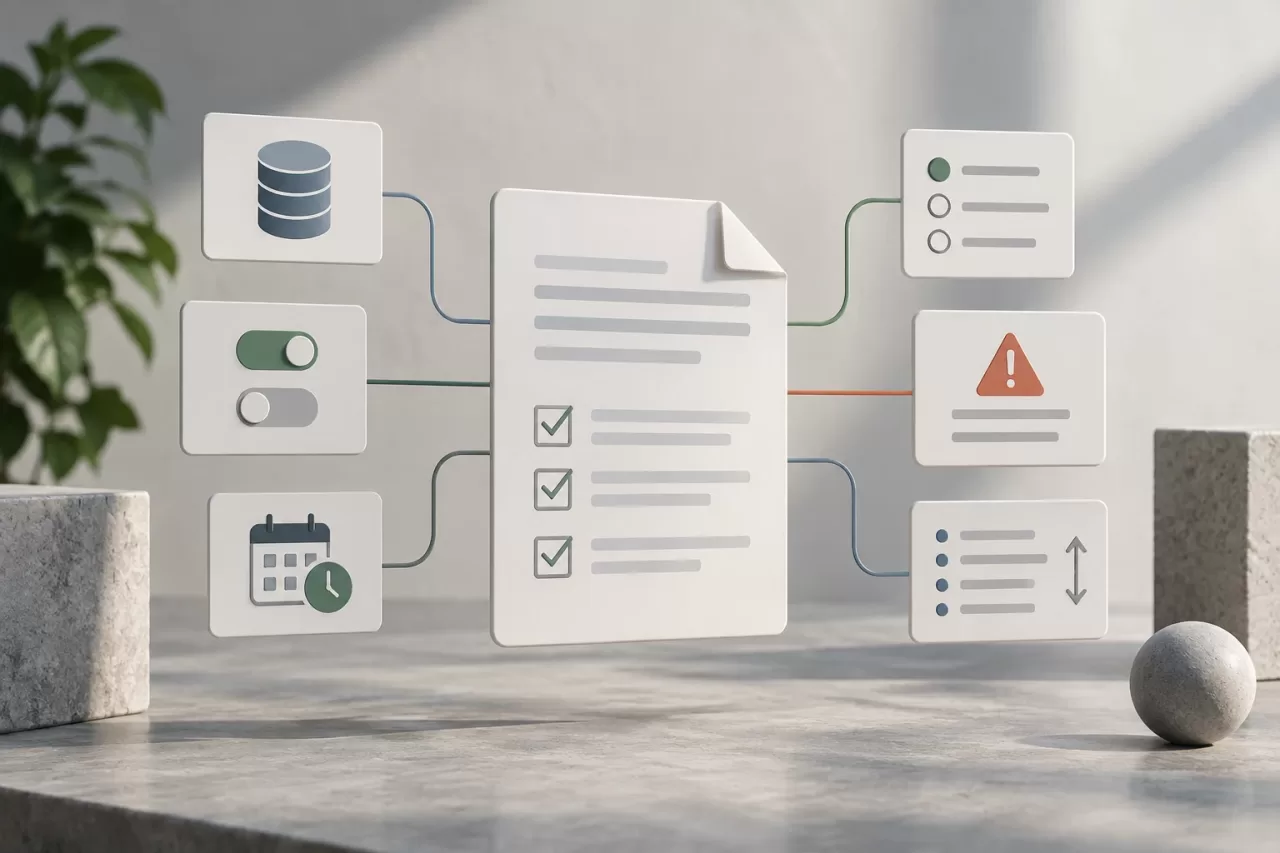
An API contract covers more than the documented schema. It includes fields and their types, whether they can be omitted or are nullable, how dates and amounts are interpreted, which values a request accepts, the format of errors, and the guarantees made about the response. It also includes observable rules such as the ordering of a collection when clients depend on it, or the stability of an identifier.
In PHP, data transfer objects, validators, and serializers often implement parts of that contract. Reviewing only the controller can leave incompatible changes hidden in a validation rule, a response resource, or a mapping between the model and the API. It is worth documenting the contract based on what the client actually observes, not on the internal structure of classes or tables.
Classify Changes Based on the Consumer
Classification is an assessment tool, not an automatic guarantee. An additive change usually keeps working for clients that ignore unknown fields, but it can break consumers that convert the response to a strict structure or validate it against a closed schema. Similarly, a new optional field in a request may be harmless for older clients, while making it required is not.
- Usually additive: adding an optional field to a request or response, or adding a value to a collection, provided consumers tolerate those elements.
- Potentially incompatible: removing or renaming a field, changing its type, making an optional field required, changing the format of an error, or changing the meaning of an existing value.
- Context-dependent: changing ordering, numeric precision, time zone, the semantics of a status, or pagination criteria. Even if the schema does not change, the result for the client may.
Before approving a change, identify consumers and review how they process the data. An unknown field may be ignored, trigger a validation error, or be exposed to logic that did not expect it. Do not assume that all languages, libraries, or client versions react the same way.
Evolve Requests and Responses Carefully
For responses, adding a field is safer if you account for the possibility that strict clients may reject additional properties. If a field changes meaning or type, do not silently reuse it. Introduce a new field with clear semantics, document its relationship to the old one, and keep both during a defined transition.
For requests, distinguishing between absent, null, and empty is essential. In PHP, validation that treats a missing key the same as its null value can delete data or apply unexpected defaults. Define what each case means and test both new and old clients. For a new field, consider initially accepting its absence and assigning compatible behavior, rather than requiring it from the first deployment.
Versioning routes is not the only option. You can evolve a contract while keeping the route if the changes are compatible, or publish a new version when they are not and coexistence makes operational sense. In either case, document the support policy: a version label alone does not say how long a contract will remain available.
Roll Out the Database and API in Phases
A safe deployment separates storage changes from exposure of the new behavior. A common sequence is to expand the schema, deploy code that can work with both the old and new structures, migrate data if needed, and finally enable the new read or write behavior. Retire old columns or paths later, once there is sufficient evidence that they are no longer needed.
This expand-and-contract approach prevents an application version from expecting a column that does not yet exist, or a new deployment from failing to work with older processes. In systems with multiple instances or background workers, account for different code versions running side by side during deployment. Migrations must be compatible with that coexistence and include a recovery strategy if a phase fails.
Gradual exposure—for example, enabling a capability for a controlled subset of consumers—can limit the impact, but it is not the same as public disclosure and does not replace compatibility. Use feature controls when they allow you to observe and roll back the behavior; define in advance which conditions will stop the rollout.
Measure Usage Without Logging Sensitive Data
To find out which consumers still use a contract, telemetry should identify the relevant version or capability without storing request or response bodies containing personal information, credentials, or commercial data. Record minimal signals, such as route, declared client version, outcome, and date; limit access and retention according to operational needs and applicable obligations.
The signal must be useful for decision-making. Distinguish requests from real users from tests, retries, or automated traffic; also monitor errors, latency, and changes in volume. If there is no reliable client identifier, do not infer its identity from sensitive data. Recognize that proxies, shared keys, and clients that do not send a version can leave gaps in visibility.
Retire a Contract Using Verifiable Criteria
Do not retire a version just because an announced deadline has passed. Define signals and thresholds appropriate to the risk: sustained absence of identifiable traffic, confirmed migration of known integrations, stability of the successor version, and a support procedure for exceptions. If unknown traffic persists, investigate before interpreting the lack of identification as lack of use.
Communicate in advance what is changing, who is affected, what the alternative is, the planned dates, and how to test the migration. Keep the information in documentation accessible to consumer teams and establish a channel for reporting incompatibilities. If the impact cannot be reversed quickly, consider a longer transition or temporary coexistence of contracts.
Pre-Publication Checklist

- Have the affected fields, types, nullability, default values, and errors been documented?
- Has the behavior of tolerant and strict clients been checked for new or missing fields?
- Do contract tests cover known consumers and validation edge cases?
- Does the database migration allow older application versions to coexist?
- Are there enough metrics to detect errors and contract usage without capturing sensitive data?
- Have owners, communication, rollback criteria, and conditions for retiring the old contract been defined?
A useful policy does not promise that no change will ever break a client. It makes assumptions explicit, limits surprises, and enables evidence-based action. Review these decisions with every contract change, especially when the API has external consumers whose update cycle the team does not control.